


The Thought Behind the Gift – A Malaysian Guide to Giving Well
There is a little ritual that many of us have experienced.
Someone hands us a gift. We smile, say thank you, perhaps exchange a few pleasantries, and wonder what might be inside. Sometimes the gift is exactly what we wanted. Sometimes it is something we would never have thought of buying for ourselves. And occasionally, we find ourselves wondering what to do with it.
But that is part of the curious business of giving and receiving.
Choosing a gift sounds simple enough. We think of an occasion, browse a few shops or websites, pick something within our budget, wrap it nicely and send it on its way.
Except it is rarely quite that straightforward.
What is appropriate for a business associate may not be suitable for a close friend. A gift that delights one person may be unsuitable for another because of dietary preferences, religious considerations or family customs. Even the way a gift is presented can sometimes carry a meaning we had not considered.
Here in Malaysia, where different cultures, religions and traditions live alongside one another, gift giving can be both wonderfully interesting and occasionally a little complicated.
Having been in the gifting business since 2002, we have helped customers choose and send thousands of gifts, flowers and hampers for birthdays, weddings, festive celebrations, corporate occasions and many moments in between.
If there is one thing those years have taught us, it is this – a good gift is not necessarily the most expensive, the most elaborate or the most impressive. It is the one that makes the recipient feel that someone has actually thought about them.
So, before you choose your next gift, here are a few things worth considering.
1. The First Rule of Gift Giving: Think About the Person, Not Just the Occasion
It is easy to start with the occasion.
A birthday calls for a birthday gift. A wedding calls for a wedding present. A visit to someone who is unwell calls for something to cheer them up.
Nothing wrong with that. But I would suggest taking one step further.
Think about the person receiving it.
Are they someone who appreciates practical things, or do they prefer something unusual? Do they enjoy food, flowers, art, books or beautiful objects for the home? Are they someone who appreciates a little luxury, or would a modest but thoughtful gesture mean more?
We have seen customers spend a great deal of time choosing a gift, only to discover that the most suitable choice was not necessarily the most expensive one.
A beautifully presented fruit basket may be more appropriate for someone recovering from an illness than an elaborate box of chocolates. A thoughtfully chosen home accessory may be more meaningful to someone who has just moved into a new home than another generic decorative item.
And for a person who seems to have everything? Perhaps the answer is not to buy them another thing they already own. It may be better to choose something they can enjoy, share or experience.
The occasion tells us why we are giving. The recipient tells us what we should give.
2. Gift Giving in Malaysia: One Country, Many Traditions
One of the things I find interesting about Malaysia is that there is no single formula for gift giving.
We celebrate Hari Raya, Chinese New Year, Deepavali, Christmas, birthdays, weddings and countless other occasions. We work with people from different backgrounds, attend one another’s celebrations and build friendships across cultures.
That diversity makes gifting more meaningful, but it also calls for a little sensitivity.
A few considerations are worth keeping in mind.
When giving gifts to Muslim recipients
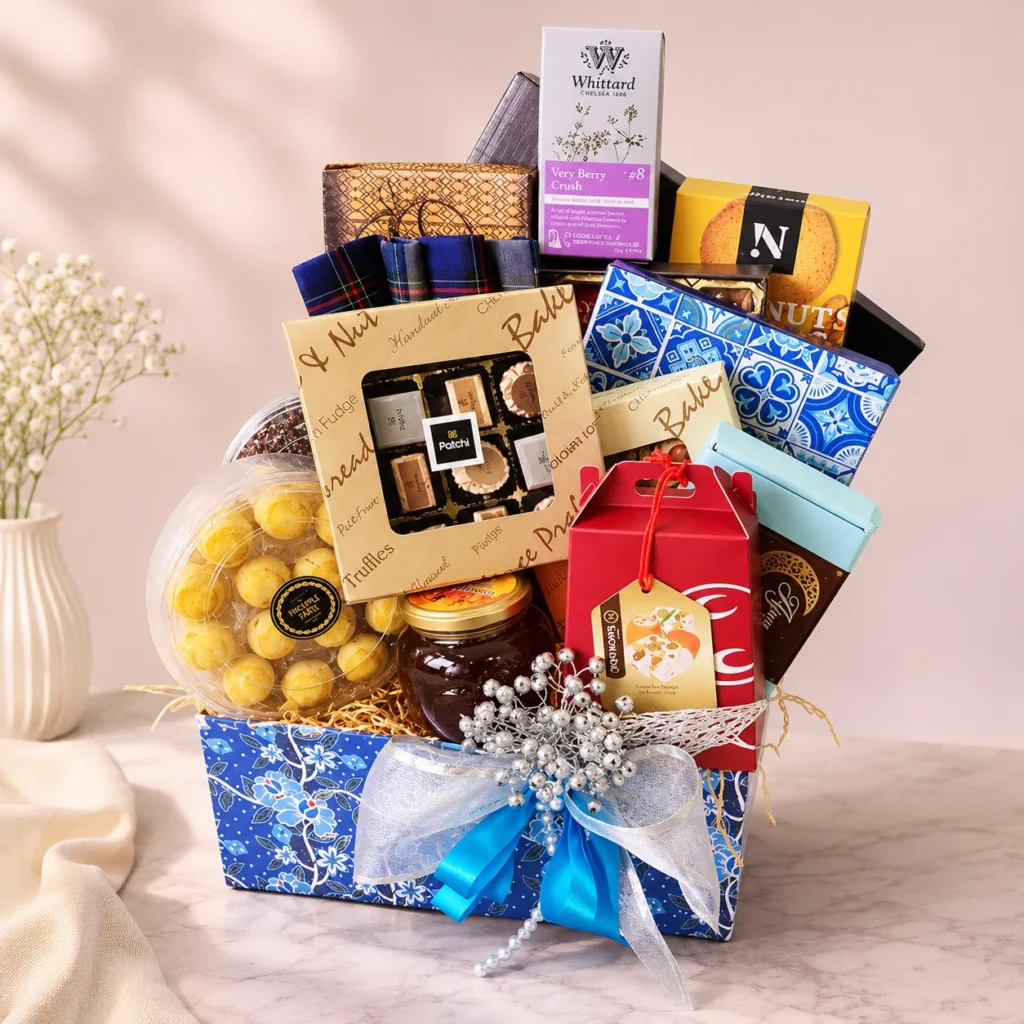
If you are giving food or hampers to a Muslim recipient, make sure the food is halal-suitable and that the product information is clear. Avoid alcohol and products containing pork or pork-derived ingredients.
If you are unsure about a particular food item, check its ingredients and certification rather than making assumptions based on its packaging or brand.
This is one reason we offer a dedicated Halal Hamper collection, with selections intended for Muslim-friendly gifting. Even then, it is always sensible to review the contents of the individual hamper before ordering.
When giving gifts to Malaysian Chinese recipients

Some Chinese families observe traditional gift-giving customs and symbolism, particularly during Chinese New Year, weddings and other important celebrations.
For example, clocks and sharp objects such as knives or scissors may be considered inappropriate gifts by people who observe these traditions. The number four is also regarded as inauspicious by some because of its association with death in Chinese-language wordplay.
On the other hand, auspicious colours, particularly red, are commonly associated with happiness and celebration.
However, customs are not universal. Younger recipients, different families and individuals may have different preferences. If you know the recipient well, you will probably have a better idea of what they appreciate than any general etiquette guide can tell you.
When giving gifts to Malaysian Indian recipients
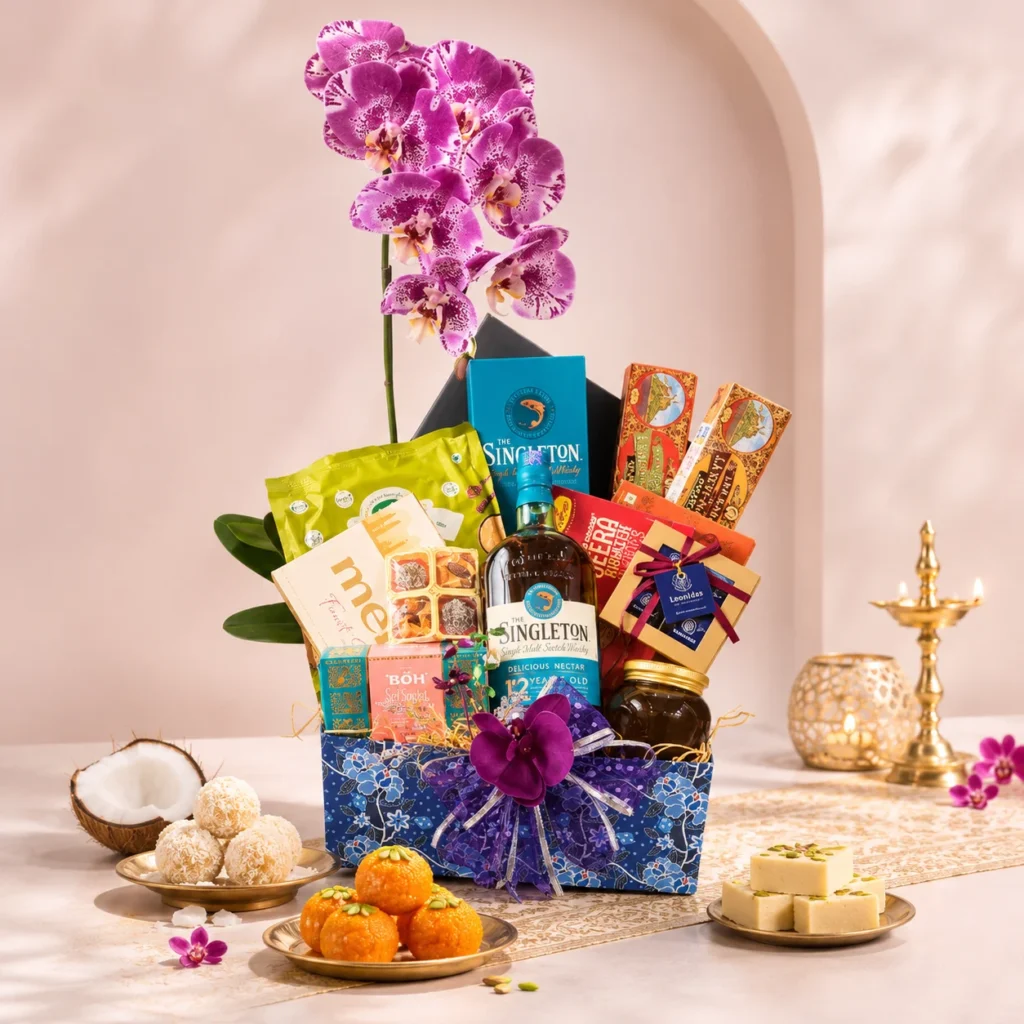
Malaysian Indian communities are equally diverse in their religious beliefs and personal practices.
For Hindu recipients, it is sensible to avoid gifts containing beef or beef-derived ingredients. Some recipients may also prefer vegetarian food, while others may have no such restriction. Do not assume that every Indian recipient follows the same dietary practices.
If you are giving a food hamper, check the ingredients and, when in doubt, ask discreetly.
The more important rule
These are useful considerations, not a checklist for identifying what every person in a particular community believes.
The best approach is to be observant, respectful and willing to ask. A simple question about dietary preferences can prevent an awkward gift, and it is certainly better than making a confident guess.
After all, good etiquette is not about memorising every cultural rule. It is about making an effort to respect the person in front of you.
3. Visiting Someone's Home: A Small Gesture Goes a Long Way
Being invited to someone’s home is one of the nicest opportunities to give a personal gift.
It need not be a grand gesture. In fact, something modest and thoughtfully chosen is often more appropriate.
A box of good-quality chocolates, a selection of biscuits, a fruit basket or a small gift for the household can make a lovely gesture.
For a Malaysian family gathering, food gifts are often a natural choice. They can be shared, placed on the dining table or enjoyed later with a cup of tea. This is particularly useful when you are visiting a household where you may not know everyone’s preferences.
A few ideas include:
Fruit gifts – A fresh fruit basket is a practical choice for a home visit, particularly when you want something that can be shared. Explore our Fruit Hamper collection.
Chocolates and confectionery – A nicely presented box or basket of chocolates is a familiar choice for many occasions. Browse our Chocolate Gifts.
Flowers – A suitable flower arrangement can be a lovely gesture when you know the recipient appreciates flowers. Consider whether a hand bouquet or a ready-to-display arrangement would be more practical.
A gift for the home – A decorative or lifestyle item can be appropriate for a housewarming or a visit to someone who enjoys entertaining.
One small practical point: if you are bringing flowers, consider whether the host has a suitable vase and somewhere to display them. A hand bouquet is lovely, but it may mean the host has to stop entertaining everyone to look for a vase!
Sometimes, a ready-to-display flower arrangement is the more considerate choice.
And remember, the purpose of bringing a gift is to show appreciation for the invitation, not to make the host feel obliged to reciprocate with something of equal value.
4. The Unspoken Details: Presentation, Colours and Numbers
We often spend more time choosing what goes inside a gift than thinking about how it is presented.
Yet presentation is part of the gesture.
A beautifully chosen gift wrapped carelessly can lose some of its charm. Conversely, a modest gift presented thoughtfully can feel rather special.
In Malaysia, colour and symbolism can matter, particularly during festive and traditional occasions.
Red and gold are popular choices for Chinese New Year because of their associations with prosperity, happiness and good fortune. During Hari Raya, elegant shades of green, gold and other festive colours are often used. Deepavali gifting may feature vibrant colours and decorative elements associated with the celebration.
But there is no need to turn every gift into a cultural examination.
If you are unsure, choose tasteful, occasion-appropriate wrapping rather than something that might carry an unintended message. Neutral, elegant packaging can be a safe choice for many everyday occasions.
There is also the question of numbers. Some traditional Chinese customs favour even numbers for certain gifts, while the number four is often avoided. In some Indian traditions, odd numbers are preferred for particular monetary gifts or religious occasions.
These customs vary, so it is worth considering the recipient and the occasion rather than applying a universal rule.
Should a gift be opened immediately?
Not necessarily.
In some Malaysian households, it is customary to put a gift aside and open it later rather than in front of the giver. In other families, opening the gift together is perfectly normal.
Do not be offended if someone does not immediately unwrap your present. Their response may have more to do with their upbringing or family custom than their level of excitement.
And if you are the recipient, a sincere thank-you is always appreciated, whether you open the gift immediately or later.
The important thing is to receive the gesture graciously.
5. Food Gifts: Thoughtful, but Check Before You Send
Food is one of the most popular choices for gifting in Malaysia. It is familiar, easy to share and suitable for many occasions.
But food is also where we need to be a little more careful.
A hamper may look beautiful, but if half its contents are unsuitable for the recipient, the presentation will not save it.
Before sending a food gift, consider:
- Halal requirements – Is the recipient Muslim? Are the ingredients and certification suitable?
- Vegetarian preferences – Does the recipient avoid meat, fish, eggs or certain animal-derived ingredients?
- Religious or cultural considerations – Are there ingredients that the recipient avoids for religious or personal reasons?
- Allergies – Are nuts, dairy, gluten or other common allergens present?
- Personal preferences – Does the recipient enjoy sweet treats, savoury snacks, fresh fruit or healthier selections?
A little checking beforehand can make the difference between a gift that is enjoyed and one that remains untouched.
This is also why I believe a good hamper should be more than a collection of expensive products arranged in a basket.
The contents should make sense together, suit the intended recipient and be appropriate for the occasion.
At Giftlab, our Halal Hampers, Fruit & Food Gifts and Chocolate Gifts offer different approaches to gifting. Do check each product description for its actual contents and suitability before ordering.

6. Gift Giving in Business: Where Thoughtfulness Meets Professionalism
This is a subject particularly close to my heart.
In the early years of Pods & Petals Giftlab, we did more than sell gifts from our own catalogue. During our first decade, we also acted as personal shoppers for a selected group of corporate clients.
Some of their requests were quite different from the usual corporate hamper.
We sourced designer art and paintings from local artists, worked with independent designer collectives and explored pieces from fine art studios. The brief was often to find something distinctive — a gift that would be remembered rather than another item carrying a company logo.
We eventually moved away from that personal-shopping direction around 2010 as our business priorities changed, although we continued to assist a smaller selection of corporate clients with special requests.
That period taught us something about corporate gifting that I still believe today:
The best corporate gifts are not necessarily the ones with the biggest logos. They are the ones that communicate the right message.
A gift to thank a long-standing client should feel different from a welcome gift for a new business partner. An employee appreciation gift may need to be practical and inclusive. A festive gift sent to a group of clients should take into account their different backgrounds and preferences.
A few things are worth considering when choosing a corporate gift.
Know the relationship
A gift for a valued long-term client may be more personal than one sent to a new business contact. But it should still feel appropriate to the professional relationship.
Consider the recipient, not just your company branding
A corporate gift should represent your organisation, but it should not become a walking advertisement. Branding can be subtle. The recipient should feel appreciated, not as though they have been handed a marketing campaign.
Be mindful of value and company policies
Some organisations have strict rules on receiving gifts, particularly in procurement, finance, government-related and regulated environments.
A generous gift may be well-intentioned but still place the recipient in an uncomfortable position. Check the recipient’s company policy before sending anything of significant value, and never use gifts to influence a business decision.
Make the logistics part of the gift experience
For corporate gifting, the presentation is only half the job. The other half is getting the right gift to the right person at the right time.
For larger orders, confirm recipient names, delivery addresses, quantities, preferred delivery dates and any dietary or personalisation requirements well in advance.
If you are arranging gifts for multiple offices or locations, allow sufficient time for coordination. A beautifully curated gift that arrives after the celebration is rather like sending a birthday cake the following week. The thought is still there, but the timing has missed its moment.
Giftlab has supported corporate gifting requirements since 2002, from individual appreciation gifts to larger festive and business orders. For organisations planning a gifting programme, you can explore our Corporate Order service.
7. When You Don't Know What to Give
We have all been there.
A colleague is leaving. A business associate has been promoted. You have been invited to a housewarming. Someone has helped you with something important, and you would like to say thank you.
You want to give something thoughtful, but you do not know the person well enough to choose something very personal.
My advice is to avoid trying too hard to be clever.
Start with something that is easy to appreciate and appropriate for the relationship.
A few options worth considering:
- Fruit or gourmet food gifts for a home visit, a get-well gesture or general appreciation.
- Chocolates for a familiar, versatile gesture, provided you have checked dietary requirements.
- Flowers when you want to add a little colour and emotion to the occasion.
- A gift for the home for a housewarming or someone who enjoys decorating their living space.
- A personalised card when you want to make a relatively simple gift feel more personal.
If you are genuinely unsure, ask someone who knows the recipient. There is nothing wrong with a little discreet homework.
And if the gift is for someone who has everything, consider something consumable or something they can enjoy with others. A good hamper, for instance, is often more useful than another decorative object that needs to find a permanent home on an already crowded shelf.
A Final Thought: The Best Gifts Make People Feel Remembered
After more than two decades in the gifting business, I have come to appreciate that choosing a gift is not simply a shopping exercise.
It involves a little observation, a little imagination and, occasionally, a little detective work.
We have helped customers send flowers to celebrate a new beginning, hampers to express appreciation, gifts to mark personal milestones and corporate presents to strengthen business relationships. The products may be different, but the intention is often the same: to make someone feel remembered.
And that, to me, is the real point of gift giving.
You do not need to spend a fortune. You do not need to follow every tradition perfectly. You simply need to consider the person, respect their preferences and choose something that feels appropriate for the moment.
At Giftlab, we have always believed that gifting should be thoughtful, personal and a little different. It is not about giving more. It is about giving with more thought.
Because the best gifts are not always the ones people remember for their price.
They are the ones that make people remember how you made them feel.
Frequently Asked Questions About Gift Etiquette in Malaysia
Fruit baskets, cakes, biscuits, chocolates and other suitable food gifts are common choices. Consider the household's dietary and religious preferences, and choose something modest and appropriate for the occasion.
Not necessarily. Some families prefer gifts to be opened later, while others are comfortable opening them in front of the giver. If you are unsure, follow the host's lead and do not take it personally if they set the gift aside.
This depends on the recipient's religion, cultural traditions and personal preferences. For example, avoid alcohol and pork-derived ingredients when gifting to Muslim recipients. Some Chinese recipients may avoid clocks or sharp objects because of traditional symbolism. For Hindu recipients, check whether beef-derived ingredients or leather products are unsuitable. When in doubt, ask discreetly.
A suitable corporate gift should reflect the business relationship, occasion and recipient. Gourmet hampers, fruit gifts, chocolates, flowers and tasteful lifestyle items can all be appropriate. Check the recipient's company gift policy, especially for high-value gifts or public-sector and regulated organisations.
No. The thought behind the gift is often more important than its price. A well-chosen, appropriately presented gift that reflects the recipient's interests and circumstances can make a much better impression than an expensive but impersonal item.